Letter To A Christian Nation is the latest bestseller by Sam Harris.
This week it is No 14 on the New York Times Bestseller List.
Review
"We all know about good things that have been derived from bad ideas. Modern religions serve many social goods such as health care for the poor. The problem is that is also services many reprehensible ideas. Harris blows the whistle, pointing out the religions of the world are based on human generated vengeful stories. Read this book and you decide your stance for the future." – Michael S. Gazzaniga, Director of the Sage Center for the Study of Mind, University of California, Santa Barbara, author of The Ethical Brain
"Sam Harris fearlessly describes a moral and intellectual emergency precipitated by religious fantasies–misguided beliefs that create suffering, that rationalize violence, that have endangered our nation and our future. His argument for the morality, the honesty, and the humility of atheism is galvanizing. It is a relief that someone has spoken so frankly, with such passion yet such rationality. Now when the subject arises, as it inevitably does, I can simply say: Read Sam Harris' Letter to a Christian Nation." – Janna Levin, Columbia University, author of How the Universe Got Its Spots and A Madman Dreams of Turing Machines
"I can't sign my name to this blurb. As a New York Times best selling author of books about business, my career will evaporate if I endorse a book that challenges the deeply held superstitions and bigotry of the masses. That's exactly why you should (no, you must) read this angry and honest book right away. As long as science and rational thought are under attack by the misguided yet pious majority, our nation is in jeopardy. I'm scared. You should be too. Please buy two, one for you and one for a friend you care about." –Unsigned, New York Times best selling author-- What would you live your life if you knew you would die one day? ", Letter to a Christian Nation." – Janna Levin, Columbia University, author of How the Universe Got Its Spots and A Madman Dreams of Turing Machines
"I can't sign my name to this blurb. As a New York Times best selling author of books about business, my career will evaporate if I endorse a book that challenges the deeply held superstitions and bigotry of the masses. That's exactly why you should (no, you must) read this angry and honest book right away. As long as science and rational thought are under attack by the misguided yet pious majority, our nation is in jeopardy. I'm scared. You should be too. Please buy two, one for you and one for a friend you care about." – Unsigned, New York Times best selling author
====================
Letter to a Christian Nation
By Sam Harris
You believe that the Bible is the word of God, that Jesus is the Son of God, and that only those who place their faith in Jesus will find salvation after death. As a Christian, you believe these propositions not because they make you feel good, but because you think they are true.
Before I point out some of the problems with these beliefs, I would like to acknowledge that there are many points on which you and I agree. We agree, for instance, that if one of us is right, the other is wrong. The Bible is either the word of God, or it isn't. Either Jesus offers humanity the one, true path to salvation (John 14:6), or he does not.
We agree that to be a true Christian is to believe that all other faiths are mistaken, and profoundly so. If Christianity is correct, and I persist in my unbelief, I should expect to suffer the torments of hell. Worse still, I have persuaded others, and many close to me, to reject the very idea of God. They too will languish in "eternal fire" (Matthew 25:41).
If the basic doctrine of Christianity is correct, I have misused my life in the worst conceivable way. I admit this without a single caveat. The fact that my continuous and public rejection of Christianity does not worry me in the least should suggest to you just how inadequate I think your reasons for being a Christian are.
Of course, there are Christians who do not agree with either of us. There are Christians who consider other faiths to be equally valid paths to salvation. There are Christians who have no fear of hell and who do not believe in the physical resurrection of Jesus. These Christians often describe themselves as "religious liberals" or "religious moderates."
From their point of view, you and I have both misunderstood what it means to be a person of faith. There is, we are assured, a vast and beautiful terrain between atheism and religious fundamentalism that generations of thoughtful Christians have quietly explored. According to liberals and moderates, faith is about mystery, and meaning, and community, and love. People make religion out of the full fabric of their lives, not out of mere beliefs.
Here, we need only observe that the issue is both simpler and more urgent than liberals and moderates generally admit. Either the Bible is just an ordinary book, written by mortals, or it isn't. Either Christ was divine, or he was not. If the Bible is an ordinary book, and Christ an ordinary man, the basic doctrine of Christianity is false. So let us be honest with ourselves: in the fullness of time, one side is really going to win this argument, and the other side is really going to lose.
Consider: every devout Muslim has the same reasons for being a Muslim that you have for being a Christian. And yet you do not find their reasons compelling. The Koran repeatedly declares that it is the perfect word of the creator of the universe. Muslims believe this as fully as you believe the Bible's account of itself.
There is a vast literature describing the life of Muhammad that, from the point of view of Islam, proves that he was the most recent Prophet of God. Muhammad also assured his followers that Jesus was not divine (Koran 5:71-75; 19:30-38) and that anyone who believes otherwise will spend eternity in hell. Muslims are certain that Muhammad's opinion on this subject, as on all others, is infallible.
Why don't you lose any sleep over whether to convert to Islam? Can you prove that Allah is not the one, true God? Can you prove that the archangel Gabriel did not visit Muhammad in his cave? Of course not. But you need not prove any of these things to reject the beliefs of Muslims as absurd. The burden is upon them to prove that their beliefs about God and Muhammad are valid. They have not done this. They cannot do this. Muslims are simply not making claims about reality that can be corroborated.
Isn't it obvious that Muslims are fooling themselves? Isn't it obvious that anyone who thinks that the Koran is the perfect word of the creator of the universe has not read the book critically? Isn't it obvious that the doctrine of Islam represents a near perfect barrier to honest inquiry?
Yes, these things are obvious. Understand that the way you view Islam is precisely the way devout Muslims view Christianity. And it is the way I view all religions.
TEN BOOKS I RECOMMEND
1. The God Delusion by Richard Dawkins
2. Breaking the Spell by Daniel C. Dennett
3. Misquoting Jesus by Bart D. Ehrman
4. Kingdom Coming by Michelle Goldberg
5. The End of Days by Gershom Gorenberg
6. Freethinkers by Susan Jacoby
7. Extraordinary Popular Delusions and the Madness of Crowds by Charles Mackay
8. Why I Am Not a Christian by Bertrand Russell
9. God, the Devil, and Darwin by Niall Shanks
10. Atheism: The Case Against God by George H. Smith

Tuesday, November 14, 2006


Friday, November 10, 2006
Meditation & Leadership
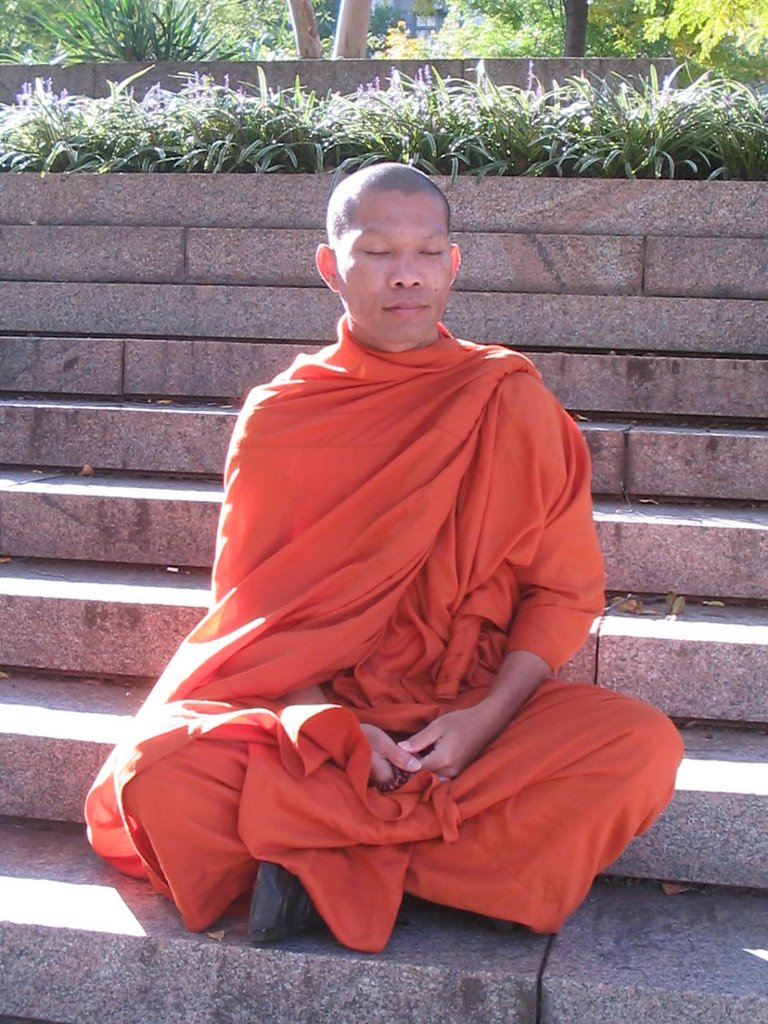 Meditation and Leadership
Preamble
Almost four months in Asia Pacific Leadership Program course that has provided me the realization of how important of individuality in supporting sustainable development. Three lessons are mainly to value the individuality that has full potential to impact the whole compounding society. In Leadership Seminar have the core ideas that center on individual’s motivation. Started its class with silent lesson had inspired me very much to explore my inner strength and ability. Culture and diversity also emphasized the existence of self to extend to other beings, environment and culture through the prospects of respecting, tolerating and compassionating. Visioning the future and personal action plan (PAP) also intensified self-centered, self-innovated, self-projected, and self-oriented. In Professional Development Leadership Seminar has encouraged individuals to improve self-resume and curriculum vitae through self-experiences, community services and orientations. Egonet and networking classified self as the most important component to create networking effectively. Through self-effort, self-intelligence, self-awareness and self-responsibility should bear fruits to success in exposing with other people and tasks. When we can create ourselves as a stable pole or a big island, there will be many people trust and want to take refuge. In Regional Core Issues have the concept that economics, politics, environment, culture, social formation and information are circle and spinning around the word “I.” “I” is the essence of these core issues. Bad or good originated from “I”. So how can we refurbish “I”, “Self” or “Individual” to be more proactive and essential milestone leading to success?
Self and relationship with nature according well-known scholars
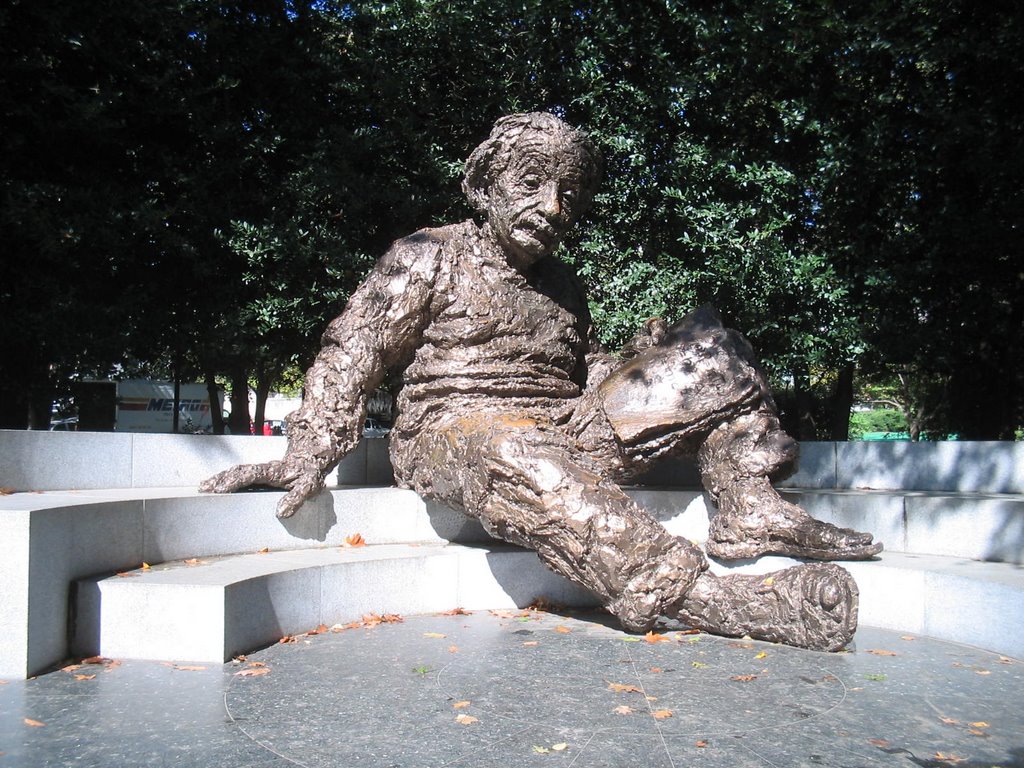
Both Mechanical Universe of Isaac Newton and Quantum Mechanics of Albert Einstein have clarified that self or individual is very essential to respond to the whole society, world and universal under a certain natural law which called original interdependent or inter relativism. Buddha was the first researcher who found this theory and taught everybody about this inter relation and pointed out the way of middle path, self-reliance and enlightenment.
Why meditation should be important to develop leadership?
When we discuss about self-reliance; it must come from inner individual discovery through meditation practice. Good leader aims at those who can lead themselves, endure to serve others and initiate self-orientation. Richard Davidson, Neuroscientist of Wisconsin University had found that meditation is the important tool to develop happiness and other abilities especially leadership[i]. This factual statement inspires us to look inside and explore this tool together.
What is meditation?
Meditation is the method to explore self-strengths, peace, wisdom, compassion, motivation and innovation. Meditation doesn’t distinguish the practitioners by race, religions, language, traits or location. It is not the faith or belief but the discovery of self-enlightenment. It is not the spiritual rites, but the developing center of wisdom, compassion, dedication and leadership. There are two types of meditation: concentration meditation and insight meditation. Concentration meditation is the practice concerning the establishing of calmness, stillness and peace of the mind while Insight Meditation focuses on the cultivation of mindfulness and consciousness.
Concentration Meditation
Meditators (Yugin) can use simple things to practice this method.
Chanting mantras or reciting any words or poem. Now, most people use hymns, songs or music that doesn’t stimulate craving, surprising or amusing as their instrument to calm their mind and body.
Watching one certain thing or item by focusing on its entity, size, color or characteristic to still the mind with it without paying attention with other things or mind-thought. In the present, they prefer to travel and spend time at the mountains, rice-fields or quiet natural sites.
Praying to what we believe to empower ourselves as the center of all things including the relationship of ourselves to the higher beings. Every religion has their basic meditation by going to pray in the temples, churches, mosques or synagogues; and through this praying they can experience self- emotional comfort. But this temporary comfort is easily affected by the outside impermanent things. So, if we need it more permanent, just take time to find meditation instructors or other reliable sources to develop ourselves at more higher level accomplishment.
 Insight Meditation
This method directs practitioners to stay in focus and being mindful. There is the different between mindfulness and peacefulness but these both are basically interdependent. Mindfulness can be cultivated through Four Bases of Mindfulness:
· Mindfulness practice based on body by being aware and mindful with our four main positioning: sitting, standing, walking and sleeping. Present time, physical mindful base has been practiced widely the breathing meditation by concentrating on abdomen’s rising and falling. Rising inhales and falling exhales.
· Mindfulness practice based on sensation is the effort to neutralize our judgment through the controlling of six senses such as eyes, nose, ears, tongue, bodily tangible and mind. Normally, ordinary people are always indulgent of extremes with their six sense experiences. For example, when our eyes see the forms, we are always judgmental with good and bad, and these two biases that lead to suffering and discrimination in our mind because we do not see them as they are. To be not judgmental and biased, we have to train our mind to be mindful and see all things around us as the reality they are.
· Mindfulness practice based on the investigating of the mind that wanders near and far. Our mind is naturally like a monkey that moves all the time. It is restlessly, so they always called it monkey-minded. Different from the Concentration Meditation, Insight Meditation doesn’t need us to try inducing thought but to be aware of all movement of the thought.
· Mindfulness practice based on Dhamma mainly focuses on the righteousness operating through body, emotion and mind. Practitioners can experience through the awareness of body movement, sensing emotion and restless monkey-minded.
Conclusion
In our modern industrialized and competitive society, people experience depressions and stresses from busy works and pressured environments. This reality leads them to understand the importance of having peaceful mind. Of course, meditation has been practiced in our daily lives as the basic awareness and we can accelerate it to higher levels of more beneficial we should get.
[i] http://sophanse.blogspot.com/2006_03_14_sophanse_archive.html
By Bhikkhu Vodano Sophan
Subscribe to:
Posts (Atom)