Sunday, March 05, 2006

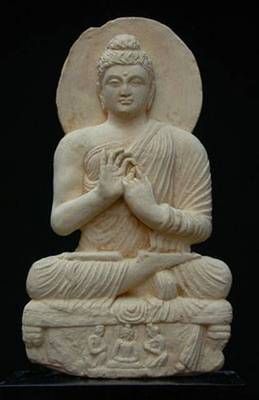
THE BUDDHA


Who is a Buddha? A Buddha is one who has attained bodhi. By bodhi is meant an ideal state of intellectual and ethical perfection which can be attained by man by purely human means. In order to make clear how the Buddha attained bodhi, let me narrate a brief summary of the Buddhas life.

About 623 years before the Christian era, there was born in Lumbini Park in the neighbourhood of Kapilavatthu, now known as Padaria in the district of modern Nepal. an Indian Sakyan prince, Siddattha Gotama by name. To mark the spot as the birthplace of the greatest teacher of mankind, and as a token of his reverence for him, the Emperor Asoka in 239 B.C.. erected a pillar bearing the inscription. 'Here was the Enlightened One born'.

Gotama's father was Suddhodana, king of Kapilavatthu, the chief town of the Sakyan clan; and his mother, who died seven days after his birth, was Queen Maya who also belonged to the same clan. Under the care of his maternal aunt, Pajapati Gotami. Siddhattha spent his early years in ease, luxury and culture. At the age of sixteen he was married to his cousin, Yasodhara, the daughter of Suppabuddha, the king of Devadaha, and they had a son named Rahula.

For nearly thirteen years Siddhattha led the life of a luxurious Indian prince, seeing only the beautiful and the pleasant. In his twenty-ninth year, however, the truth gradually dawned upon him, and he realized that all without exception were subject to birth, decay and death and that all worldly pleasures were only a prelude to pain. Comprehending thus the universality of sorrow, he had a strong desire to find the origin of it, and a panacea for this universal sickness of humanity. Accordingly he renounced the world and donned the simple garb of an ascetic.
Wandering as a seeker after peace he placed himself under the spiritual guidance of two renowned brahman teachers, Alara and Uddaka. The former was head of a large number of followers at Vesali and was an adherent of Kapila, the reputed founder of the Sassata system of philosophy, who laid great stress on the belief in atma, the ego. He regarded the disbelief in the existence of a soul as not tending towards religion. Without the belief in an eternal immaterial soul he could not see any way of salvation. Like the wild bird when liberated from its trap, the soul when freed from its material limitations would attain perfect release; when the ego discerned its immaterial nature it would attain true deliverance. This teaching did not satisfy the Bodhisatta, and he quitted Alara and placed himself under the tuition of Uddaka.

The latter also expatiated on the question of 'I'', but laid greater stress on the effects of kamma and the transmigration of the soul. The Bodhisatta saw the truth in the doctrine of kamma, but he could not believe in the existence of a soul or its transmigration; he therefore quitted Uddaka also and went to the priests officiating in temples to see if he could learn from them the way of escape from suffering and sorrow. However, the unnecessarily cruel sacrifices performed on the altars of the gods were revolting to his gentle nature, and Gotama preached to the priests the futility of atoning for evil deeds by the destruction of life, and the impossibility of practising religion by the neglect of the moral life.

Wandering from Vesali in search of a better system, Siddattha went to many a distinguished teacher of his day, but nobody was competent to give him what he earnestly sought. All the so-called philosophers were groping in the dark, it was a matter of the blind leading the blind, for they were all enmeshed in ignorance. At last Siddattha came to a settlement of five pupils of Uddaka, headed by Kondanna, in the jungle of Uruvela near Gaya in Magadha. There he saw these five keeping their senses in check, subduing their passions and practising austere penance. He admired their zeal and earnestness, and to give a trial to the means used by them he applied himself to mortification, for it was the belief in those days that no salvation could be gained unless one led a life of strict asceticism, so he subjected himself to all forms of practicable austerities. Adding vigil to vigil, and penance to penance, he made a super-human effort for six long years until eventually his body became shrunken like a withered branch. His blood dried up, the skin shrivelled and the veins protruded, but the more he tortured his body the farther his goal receded from him. His strenuous and unsuccessful endeavours taught him one important lesson, though, and that was the utter futility of self-mortification.

Having this valuable experience he finally decided to follow an independent course avoiding the two extremes of self-indulgence and self-mortification, for the former tends to retard one's spiritual progress and the latter to weaken one's intellect. The new path was the Majjhima Patipada, the Middle Path, which subsequently became one of the salient characteristics of his teaching.
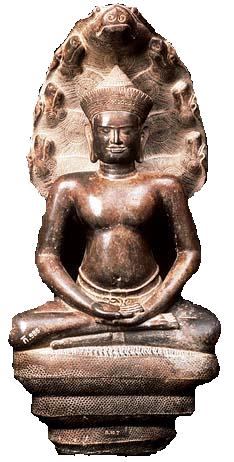
Early in the morning on the full moon day of Vesakha, as he was seated in deep meditation under the Bodhi Tree, unaided and unguided by any supernatural agency but solely relying on his own efforts, the consciousness of true insight possessed him. He saw the mistaken ways that all the various faiths maintained, he discerned the sources whence earthly suffering came and the way that leads to its annihilation. He saw that the cause of suffering lay in a selfish cleaving to life, and that the way of escape from suffering lay in treading the Eightfold Path. With discernment of these grand truths and their realization in life, the Bodhisatta eradicated all passions and attained enlightenment - he thus became a Buddha.

Having attained Buddhahood, the supreme state of perfection, he devoted the remainder of his precious life to serving humanity, both by example and precept, without any personal motive whatsoever. In order to deliver his first sermon the Buddha started for Benares, which has been famous for centuries as the centre of religious life and thought. On his way he met one of his former acquaintances. Upaka, a Jain monk, who, being struck by his majestic and joyful appearance, asked, 'Who is the teacher under whose guidance you have renounced the world?' The Buddha replied, 'I have no master, I am the Perfect One, the Buddha. I have attained peace. I have attained Nibbana. To found the Kingdom of Righteousness I am going to Benares: there I shall light the lamp of life for the benefit of those who are enshrouded in the darkness of sin and death.' Upaka then asked 'Do you profess to be the Jina, the conqueror of the world?' The Buddha replied, ' Jinas are those who have conquered self and the passions of self, and those alone are victors who control their passions and abstain from sin. I have conquered self and overcome all sin, therefore I am the Jina.'

At Benares he met Kondanna and his four companions in the Deer Park, now known as Saranath. When these five saw the Buddha coming towards them they addressed him as Gotama, his family name. Then the Buddha said to them, 'Call me not after my personal name, for it is a rude and careless way of addressing one who has become a Buddha. My mind is undisturbed whether people treat me with respect or disrespect, but it is not courteous for others to call one who looks equally with a kind heart upon all living beings, by his familiar name; Buddhas bring salvation to the world and so they ought to be treated with respect.' Then he preached them his first great sermon, the Dhammacakkapavattana Sutta, in which he explained the Four Noble Truths and the Noble Eightfold Path. They received ordination and formed the first nucleus of the holy brotherhood of disciples known as the Sangha.

During his active life the Buddha made many converts, high and low, rich and poor, educated and illiterate, brahmans and chandalas, ascetics and householders, robbers and cannibals, nobles and peasants, men and women from all classes and conditions became his countless disciples, both ordained and lay. After a supreme ministry of forty-five years the Buddha, in his last preaching tour, came to the town of Kusinara in the eastern part of Nepal, where he passed into Nibbana at the ripe age of eighty. His last words to his disciples were,'All conditioned things are subject to decay; strive with heedfulness'.

The Buddha was, therefore, a human being. As a man he was born, as a man he lived, and as a man his life came to an end. Though a human being he became an extra-ordinary man, acchariya manussa, as he himself says in the Anguttara Nikaya; he does not claim to be an incarnation of Vishnu, as the Hindus believe, nor does he call himself a saviour who saves others by his personal salvation. The Buddha exhorts his disciples to depend on themselves for their salvation, for both purity and defilement depend on oneself. In the Dhammapada he says, 'You yourselves should make the exertion, the Buddhas are only teachers. The thoughtful who enter the Way are freed from the bondage of sin. He who does not rouse himself when it is time to rise, who, though young and strong is full of sloth, whose will and thoughts are weak, that lazy and idle man will never find the way to enlightenment. Strenuousness is the path of immortality, sloth the path of death. Those who are strenuous do not die; those who are slothful are as if dead already.'

Buddhas point out the path, and it is left to us to follow that path to save ourselves. To depend on others for salvation is negative, but to depend on oneself is positive. In exhorting his disciples to be self-dependent the Buddha says in the Parinibbana Sutta, 'Be ye lamps unto yourselves; be ye refuges to yourselves; hold fast to the Dhamma as a lamp; hold fast to the Dhamma as a refuge; seek not for refuge in anyone except yourselves. Whosoever shall be a lamp unto themselves and a refuge unto themselves, it is they among the seekers after bodhi who shall reach the very topmost height.'

Furthermore, the Buddha does not claim the monopoly of Buddhahood which, factually, is not the special prerogative of any specially chosen person. He reached the highest possible state of perfection to which any person could aspire, and he revealed the only straight path that leads thereto. According to the teachings of the Buddha, anybody may aspire to that supreme state of perfection if he makes the necessary exertion; thus, instead of disheartening his followers and reserving that exalted state only for himself, the Buddha gave encouragement and inducement to follow his noble example.

The teaching founded by the Buddha is known in English as Buddhism.

Saturday, March 04, 2006

Non-biblical sources in Christian tradition?

Non-biblical sources in Christian tradition?

AT the time of the Buddha, (5th-6th century bce)The Israelites were on exile to Babylon, close enough to India.There were a few benign prophets: Yehezkel, Jeremiah, Daniel, who were propagating new ideas of salvation, humanist religious reforms And abstention from animal sacrifices.Shared with the early Buddhist customs was the absence of Images and their worship, Very much the refusal of fertility gods.

Maybe the decisive justification of both new believes(If an apology is needed it is, as ever, about the obscure appearance of the Clear thought of the Buddhist, as a parable and a hint in religions. Another point of similarity was the reverence toward wisdom and learning In the form of Scriptural knowledge, a non-trivial point in the context.after the death of Alexander of Macedonia, (3rd century bce)His vast occupations were divided among his generals, who soon started fighting Each other, but In fact established a Greek hegemony from the Sindu to The Nile. (a fascinating read is E.Lamotte). These earth shaking political upheavals were contemporaneous of Dharma Asokaa, The Buddhist king who sent Missionaries. There is one remaining Asokan pillar, third of which is in Aramaic, Hebrew Alphabeth (if any one knows more about it, please tell us). The next few centuries saw growing variations on that, with the total decline of Greek Religion, (As it was changed to its Roman version, notably with the alteration of a Ridiculous god of war to the important Mars.

The Roman faith was in fact, an oppressive, planted attempt at consensus.) And a spread of the messages toward central, eastern as well as westward. The Greek in India had certainly adopted Buddhism(King Miliander of the questions of King Milinda). The Greek thought maybe waned, but it's asthetic gained ground. The first Buddha images were probably made in Gandhara, adopting the conventional representation of Apollo.and the idea and representation of a god in a human form appearedin Christian early sects.before so, the symbol of the (mostly schematic) fish was also shared by early Christian and Buddhist alike but that may be of an even earlier origin, when the word 'fish'in ancient India was used as a pun on the word 'light'!. The image and practice of medicine was commonly and directly, in some Areas even today, associated with the Buddhist monks. Buddhist community was established in Alesanda, 1st century BCE.

There was a community of Therapeutic monks and nuns in Alexandria, Egypt.As they were practicing medicine, the word Therapy, came to be (Thor and Thotor, author forgoten,a study in comparative religion) (In a perfectly meaningful circle, the root. Denotes solidity, and necessarily, health) a similar community existed in Israel/Judea of the misleading English name esseness. In Hebrew, the name is... Isi. (Identical to the Pali ascetic sage, living in the wilderness). The mystery of the cult was and still is a subject of fantasies and speculation.

But undoubtly, following the description of the former Jewish general, Roman prote and historian, Josephus Flavius, They were influenced by the Indian ascetic practices: Wearing loin cloth, extreme ascetics, sun worship, ritual bathing, Living in the wilderness. Purity of conduct was strictly kept.The communities were divided to married and celibates, who had to serve a Year of probation to be accepted.The celibates carried metal rod as weapon, as Saivite saadhuu still do today. A farther common idea about relation is that the Dead Sea scrolls, where a Teacher of light. Is mention as leader,were their writing.There is a heated debate on the subject, Initially it was thought that the community of the Isis. Was living close by (the caves where the scrolls where found) in Kumaran (again what is in a name?). The current thought gaining now, sees the place as a military strong hold and the scriptures as work of the city brought to be hidden at the time of the great revolt. However, it may more simply be present ideas of society.Other speculation is that this was a Christian community, who Nurtured Jesus. Actually today, a Christian sect claims the heritage...

These may or may not indicate certain influences,But more than everything else, the late Jewish/Christian books seem to reflect a revolutionary benevolence,the close intimacy with god, the sudden appearance of a Devil(1) useful advices on personal religious attitudes, a formulation of a new understanding, All, up until today, I believe, generated by the influential, even if indirect, Sanity and clarity of the Blessed One.


Metta
Jothiko Bhikkhu

Thursday, March 02, 2006

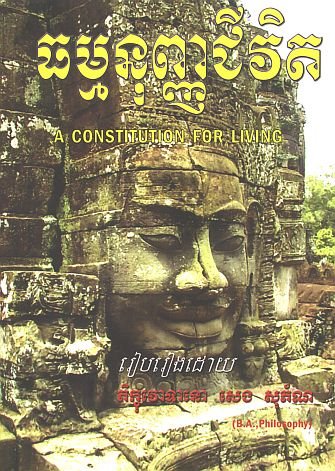
My Brief Biographical Essay

Brief Biographical Essay


I have graduated from “10 January 1979 High School” in Siem Reap, Cambodia in 1993. Since then, I have entered a monastic life up to present. I have not worked outside of the religious employment.

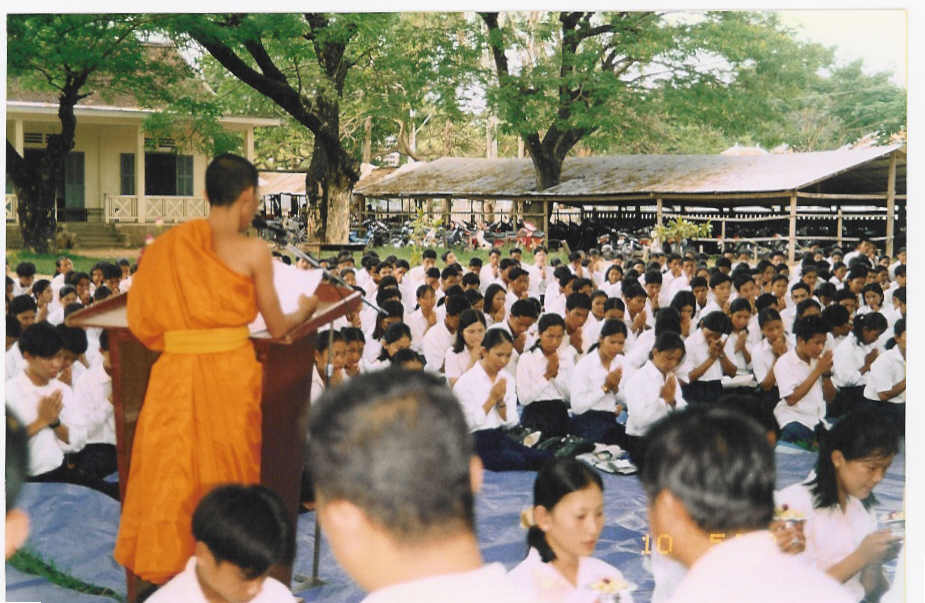
I first studied the Buddha's teachings and practised meditation in Wat Preah Indra Korsa, Siem Reap, Cambodia. At the same place, I also taught English language and mathematics to novices and monks. I was offered a fellowship opportunity to pursue higher education and from 1997 to 2000, I pursued furthr studies at Mahachula Buddhist University in Bangkok, Thailand. Each summer, I assisted as a mentor in the Moral Outreach Projects for Thai Young Children held in almost every part of Thailand . In my last two years there, 1999-2000, I managed this project and set up a team of Cambodian monks to instruct Cambodian students in primary schools, secondary schools, and high schools as well as children in remote areas and the general public throughout Cambodia. We focus on eradicating illiteracy and enhancement of ethics. We have instructed almost 15,000 participants now. Presently, this project is still being carried out by the same team. I also co-founded the Khemera Students Association in Thailand in 1998. The Association focuses on strengthening friendship and unity among Cambodian students and helping each other in times of crisis.


I came to Canada on the invitation of the Cambodian-Canadian Association in Canada. Since arriving here, I have coordinated, facilitated activities among the different ethnic groups and mediated for Cambodian community members. I am also an active member of the International Buddhist Foundation of Canada and a steering committee of FaithLink Organization which focuses on ending Domestic Violences. In the meantime, I teach Vipassana meditation to Cambodians as well as the local people, conduct ritual blessings, and teach the Khmer language and culture. As a project coordinator, I also manage the Khmer Language School on Saturday and Sunday to instruct children in morals, Khmer culture and Khmer language. I also organize workshops and conferences. I am consistently promoting peaceful living in families in an effort to end domestic violence. As we know, the happiness of a family is a fundamental basis for peace in the world. I presented "The Buddha's Teaching to End Domestic Abuses" at the Bridging to End Domestic Violence Conference of FaithLink and have participated in many other social workshops.


Presently, I have tried to utilize my knowledge and capacity to better the Cambodian community and other affiliated societies. I also try to seek new experiences by involving myself in current issues. But I am not satisfied with my current abilities which I think is inadequate to meet the philanthropic task I have set for myself. I am still seeking reliable avenues that could help me improve my leadership skills and achieve my passion. I will try to achieve this passion which I have held so long - to rebuild peace and advancement for Cambodia and the world community.


Presently my prime concerns are :


- Focusing on education development for ethical awareness, leadership, reconciliation, unity and peace.


- Strengthening and enhancing Buddhist education and monastic leadership in community-based development.


- Promoting Buddhist education to be equivalent to secular education and to modernize the methodology of instruction following other developed countries. This will be important to encourage the Buddhological pedagogy which encourages full freedom for learners.


- Forming and supporting the concept of Buddhist and secular education as united components in maintaining sustainable development in Cambodia.


- Adapting Buddhist curriculum such that it is applicable for for monk students and strengthening social ethics through the use of Buddhist ethics in secular schools.


Most of my work which I have done on a volunteer basis. I have dedicated myself to serving others, especially the people of Cambodia who are still traumatized by decades of civil war.


Despite, having helped some people and communities, my heart constantly thinks of Cambodians. They continue to suffer from starvation, domestic abuse, human trafficking, child prostitution, high illiteracy rate, high child mortality rate and unequality in social living.


Among these disadvantageous current issues, the high rate of illiteracy is my most concerned. This deficit truly caused by the failure of proper education leadership development.


Preah Bhikkhu Vodano

New Adjustment: July 2006 assisted by Upasaka Yu Ban

Wednesday, March 01, 2006

Buddhist Perspectives on Domestic Violences

This article presented at a Conference organized by FaithLink in March 14, 2005

By Preah Bhikkhu Vodano Sophan

Introduction
Historically, domestic violence has been culturally and institutionally sanctioned
and legitimized within the Asian culture. Consequently, it is a pervasive health,
social, and human rights issue, which has serious repercussions on the victim's
physical health and mental health. Despite its serious consequences and
the scope of the problem, it has been referred to as a "silent crisis". (1)
___________________________ ___________________________
___________________________ ___________________________
___________________________ ___________________________
___________________________ ___________________________

Brief History
- In 543 before Christianity, Buddha passed away (Parinibbana or enlightened
by without any substratum of life remaining).
- During King Asoka’s reign, Buddhism was recognized as the golden era. King
Asoka patronized the Monk Community Third Council and sent missionaries to
different nine directions.
- In the Fourth Council, Buddhism was clearly divided into two main streams:
Theravada (the teaching of elders) and Acariyavada (the teaching of recent
teachers).
___________________________ ___________________________
___________________________ ___________________________
___________________________ ___________________________
___________________________ ___________________________
___________________________ ___________________________

Overview Buddhism
Triple Gem
- Buddha: means the Awakened One or Enlightened One. His former name was
Prince Siddhatta Goutama.
- Dhamma: means nature, rule, discipline, doctrine, truth, way of life or
teaching. Some core teachings are Five Precepts, Four Noble Truth, Three
Roots of Evil, Three Characteristics, Eightfold Path, Kamma…etc.
- Sangha: means monks community or followers that can consist of Bhikkhu,
Bhikkhuni, Laymen and Laywomen.
___________________________ ___________________________
___________________________ ___________________________
___________________________ ___________________________
___________________________ ___________________________
___________________________ ___________________________

Main Teaching
- Buddha’s main teaching goal is to provide his followers happiness, peace
and salvation. He instructed each family member who came to meet him to live
harmoniously together. It is individual responsibility to refrain all kinds of
violence.
- In community, the association with others like between employer and
employee, teacher and student, friend and friend, has their own specific codes
in practicing.(2)
___________________________ ___________________________
___________________________ ___________________________
___________________________ ___________________________
___________________________ ___________________________


Definition: DV according to BD
Five Abuses
1. Killing any living beings, harming, battering, beating
2. Stealing, robbing, cheating, wrong living.
3. Raping, sexual harassment, sexual misconduct
4. Telling lies, using harsh words, using malicious words and talking uselessly.
5. Consuming drugs, drinking alcohol, other addictions. (3)
___________________________ ___________________________
___________________________ ___________________________
___________________________ ___________________________
___________________________ ___________________________


Ten Akusala Kamma or Ten Evil Deeds
1. Physical deed -three(3) : Killing - ending the life of another living being.
Stealing - robbing of others’ property or belongings. Unchaste – nonconfining
to one’s own wife/husband or children
2. By word or speech –four (4): Lying - telling the untruth. Slandering – talk ill
of others. Harsh speech - using bad words or abusive language. Frivolous
talk – utterly vain speech (useless or empty talk)
3. By thought (mind) – three (3): Avidyaa or Abhijjaa (Covetousness) – delusion
or not seeing the truth. Vyaapaada (Illwill)
– hatred, resentment and anger. Michchaaditthi (False view) – living
with false concepts.(4)
___________________________ ___________________________
___________________________ ___________________________
___________________________ ___________________________
___________________________ ___________________________
___________________________ ___________________________


Three Roots of Evil
1. Lobha : greed, desire or ambition is the cause leading to restlessness,
distress and stress when they don’t get what they want.
2. Dosa : when Lobha increases, anger or hatred ignited the mind leading to
the destruction of themselves and others.
3. Moha : when Dosa increases, delusion or ignorance empowers itself making
the perpetrators loss their mindfulness, responsibility and do the evils
vigorously. (5)
___________________________ ___________________________
___________________________ ___________________________
___________________________ ___________________________
___________________________ ___________________________
___________________________ ___________________________
___________________________ ___________________________

The Sayings of the Buddha
" With gentleness overcome anger. With generosity overcome meanness. With truth overcome deceit."

" The wise harm no one. They are masters of their bodies and they go to the boundless country. They go beyond sorrow."
Dhammapada, Anger : 17
___________________________ ___________________________
___________________________ ___________________________
___________________________ ___________________________
___________________________ ___________________________

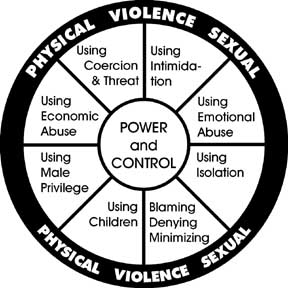
The Forms of Domestic Violence (6)
1. Physical abuse such as kicking, punching, biting, slapping, strangling,
choking. In Buddhism, these matters are absolutely wrong. Following the first
precept, which doesn’t allow us to kill, batter, beat or harm others.

2. Psychological abuse such as intimidation, verbal abuse, humiliation, putdowns,
ridiculing, threats, threatening to hurt victim's family and children. In
Buddhism, those acts are considered as mental violence. Perpetrators have lost
their mindfulness, consciousness and like to act for their own entertainment. It is
mostly caused by their bad habit or alcohol addiction. This is misconduct of the fourth
or fifth precept.

3. Sexual abuse such as rape, forms of sexual assault such as forced
masturbation, sexual humiliation, refusing to use contraceptives and coerced
abortions. These acts are wrong and breaks the third precept which prohibits
sexual misconduct or sexual harassment.

4. Financial/economic abuse such as withholding of money, refuse to allow
victims to open bank account, all property is in the perpetrator's name or not
allowing the victims to work. This is another type of violence. Perpetrators are
greedy and selfish.
___________________________ ___________________________
___________________________ ___________________________
___________________________ ___________________________
___________________________ ___________________________
___________________________ ___________________________

Observe five precepts regularly such as:
1. Refrain from killing, beating, battering or harming others. One must cultivate
compassion and spread it around.
2. Refrain from stealing, robbing, cheating or corrupting. One must live by a right
livelihood.
3. Refrain from committing sexual misconduct such as raping, sexual
humiliation. One must concentrate on their craving.
4. Refrain from telling lies, using harsh words, using malicious words and talk in
uselessness. One must aware all speech.
5. Refrain from consuming drugs, addictive things or drinking alcohol. One
must be mindful and conscious.
___________________________ ___________________________
___________________________ ___________________________
___________________________ ___________________________
___________________________ ___________________________
___________________________ ___________________________

Prevention and Resolution
Ten Kusala Kamma or Ten Good Deeds
(I).Generosity - Daana, which yields wealth.
(ii) Morality - Siila, which gives birth in noble families and in state of happiness.
(iii) Meditation - Bhaavanaa, which gives birth in Realms of Form and Formless Realms, and
which tends to gain Higher Knowledge and Emancipation.
(iv) Reverence - Apacaayana, the cause of noble parentage.
(v) Service - Veyyaavacca, which tends to produce a large retinue.
(vi) Transference of merit - Pattidaana, which serves as a cause to give in abundance in
future births.
(vii) Rejoicing in others' merit - Pattaanu Moodanaa, which is productive of merit
wherever one is born.
(viii) Hearing the Doctrine - Dhamma Savana, which promotes wisdom.
(ix) Expounding the Doctrines - Dhamma Deesanaa, which promotes wisdom.
(x) Straightening of one's own views - Ditthijju Kamma, which strengthens one's confidence. (7)
__________________________ __________________________
__________________________ __________________________
__________________________ __________________________
__________________________ __________________________
__________________________ __________________________
__________________________ __________________________
__________________________ __________________________
__________________________ __________________________


Four Immeasurableness
1. Loving-kindness, Mettaa: is the wish that all sentient beings, without exception, be
happy. It counters ill-will.
2. Compassion, Karunaa: is the wish for all sentient beings to be free from suffering. It
counters cruelty.
3. Appreciative joy, Muditaa: is the wholesome attitude of rejoicing in the
happiness and virtues of all sentient beings. It counters jealousy and makes people less selfcentred.
4. Equanimity, Ubekkhaa: is the attitude of regarding all sentient beings as equals,
irrespective of their present relationship to oneself. The wholesome attitude of
equanimity counters clinging and aversion.(8)
_________________________ _________________________
_________________________ _________________________
_________________________ _________________________ _________________________ _________________________
_________________________ _________________________
_________________________ _________________________ _________________________ _________________________

The Threefold Training
1. Training in Higher Morality or Ethics, Sila: consists of right speech, right
action and right livelihood.
2. Training in Higher Mentality or Meditation, Samadhi: consists of right
effort, right mindfulness and right concentration.
3. Training in Higher Wisdom or Insight, Panna: consists of right understanding
and right view.(9)
_________________________ _________________________ _________________________ _________________________ _________________________ _________________________
_________________________ _________________________
_________________________ _________________________
_________________________ _________________________


The Saying of The Buddha
"All beings tremble before violence. All
fear death. All love life. See yourself in
others. Then whom can you hurt?. What
harm can you do?"


"He who seeks happiness by hurting
those who seek happiness, will never find
happiness. For your brother is like you.
He wants to be happy. Never harm him
and when you leave this life, you too will
find happiness."

Dhammapada, violence : 10
_________________________ _________________________ _________________________ _________________________
_________________________ _________________________
_________________________ _________________________
_________________________ _________________________

Conclusion
- All problems involving Domestic Violence has its actual cause and effect. So we have to
study about the effect of the problem, the cause of the problem, the extinction of the
problem and the way leading to the extinction of the problem.
- Domestic violence will be easily eradicated if individuals agree to live together with lovingkindness and compassion. They have to response to the Law of Kamma.
_________________________ _________________________
_________________________ _________________________
_________________________ _________________________
_________________________ _________________________


REFERENCES
(1)&(6) http://www.nursingceu.com/NCEU/courses/domesticviolence/
(2) Tipitaka, Dhighanikaya, Pathikavakka
(3) Tipitaka, Dhighanikaya, Pathikavakka
(4) Tipitaka, Dhighanikaya, Pathikavakka
(5) Tipitaka, Dhighanikaya, Pathikavakka
(7) Tipitaka, Dhighanikaya, Pathikavakka
(8) Tipitaka, Dhighanikaya, Mahavakka
(9) Tipitaka, Dhighanikaya, Pathikavakka

March 1, 2006